

Corn Flakes Breakfast Cereal Maize Flakes Production Line
Corn Flakes Production Line for Crispy Breakfast Cereals — twin-screw extrusion processes corn grits into high-density particles for uniform flaking and toasting.
- Twin-screw extruder and flaking mill ensure precise thickness
- Baking machine and sugar coating system deliver even drying and consistent flavoring Our engineers provide on-site installation, commissioning, and comprehensive operator training.
-
Stock and custom lead timesCommon standard models ship within 10 days. Custom configurations take 30–50 working days.
-
Full-line test run before shipmentEvery line runs at our factory before it leaves. Third-party inspection can be arranged.
-
CE certified, customs-readyCE to Machinery Directive 2006/42/EC. Shipped with CE certificate, packing list, invoice and customs documents.
-
Engineers on siteOur engineers install and commission the equipment in your plant and train your operators.
Product Details
How Corn Flakes Breakfast Cereal Maize Flakes Production Line Works in Your Plant
Jinan MT Machinery builds this equipment in its own factory in Shandong, China, with in-house CNC machining, welding, assembly and painting lines. Parts in contact with food material are food-grade stainless steel.
Test your local grains — Bring your corn grits or rice to our factory for live extrusion and flaking trials before signing the contract.
Technical Specifications
| Parameter | Value |
|---|---|
| Product Type | Corn Flakes Production Line |
| Capacity | 120-150 kg/h, 200-300 kg/h, 300-500 kg/h |
| Total Installed Power | 180 kW, 200 kW, 240 kW |
| Power Consumption | 126 kW, 140 kW, 168 kW |
| Line Length | 48 m, 58 m, 68 m |
| Main Extruder | Twin-Screw Extruder with combined functional screws |
| Screw Material | Alloy steel |
| Control System | Inverter speed adjustment for feeding, main driving, and cutting |
| Material of Construction | Food-grade stainless steel for food-contact parts, stainless steel conveyor belts, high rigidity metal for flaking rollers |
| Raw Materials | Corn, rice, wheat, oat, barley |
| Certification | CE, ISO 9001:2015 |
Application Suitability
| Industry | Typical Products |
|---|---|
| Breakfast cereal plants | Plain and frosted corn flakes for retail markets |
| Snack factories | Nutritious ready-to-eat cereal products for children and adults |
| OEM producers | Custom grain recipes using local raw materials |
Why Half the Frosted Corn Flakes End Up Soggy in the Bag
It starts with uneven flaking and poor drying synchronization.
Many buyers face rejected batches because the flakes vary in thickness, leading to inconsistent toasting and sugar clumping. As someone who spent years commissioning lines in Vietnam and Thailand, I once rushed a project without properly adjusting the flaking roller gap. The resulting uneven flakes caused a whole batch to be rejected by the local buyer. A perfect extruder means nothing if the downstream flaking and drying are not perfectly synced, which is why a corn flakes breakfast cereal production line manufacturer must prioritize downstream integration over just pushing material through a barrel.
Integrating the Line into Your Production Flow
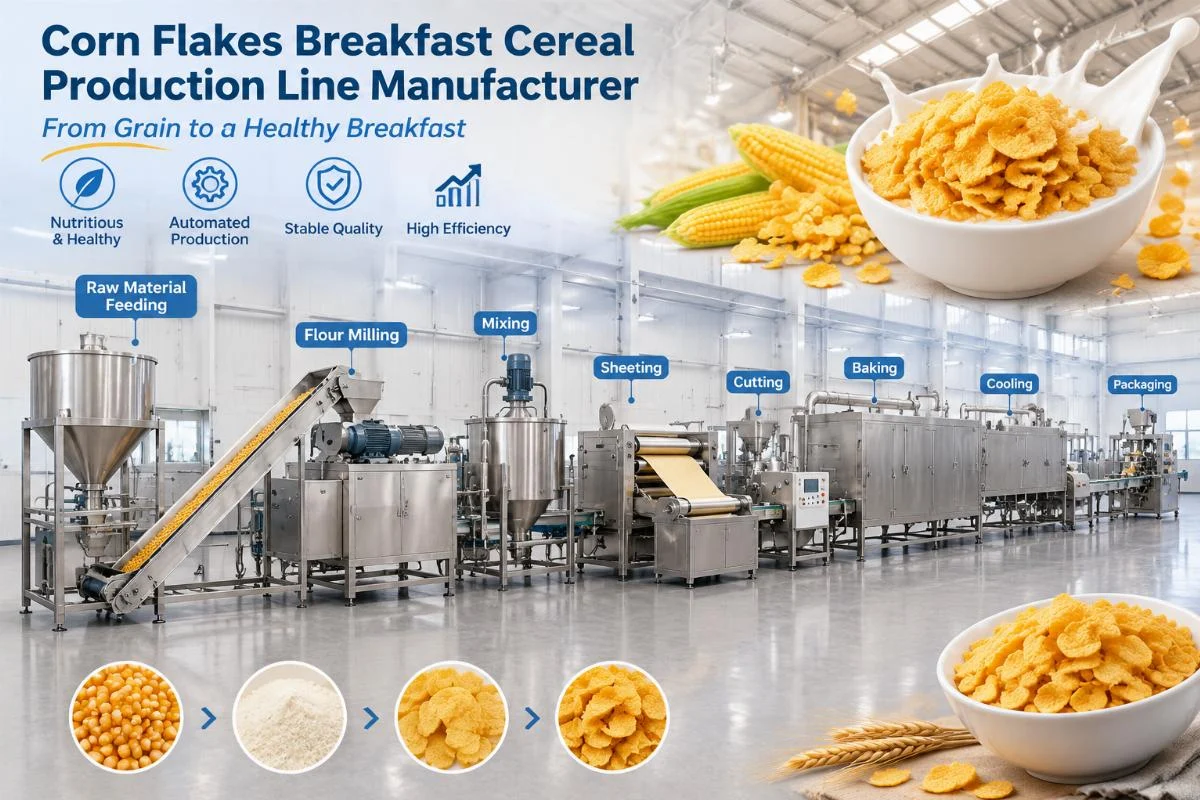
A reliable corn flakes breakfast cereal production line manufacturer designs the workflow to match your specific facility constraints and output goals. We map out the mixing, extrusion, flaking, and coating stages to ensure smooth material transfer without bottlenecks. By running full trials with your local raw materials before finalizing the layout, we guarantee that every flake is crisp and uniform. This approach also allows for flexible OEM and ODM customization, ensuring the line adapts to your unique recipes rather than forcing your recipe to fit the machine.
Overcoming Raw Material and Processing Challenges
Local grain variations in moisture and starch content directly affect extrusion stability and final flake texture. If the initial drying does not reduce moisture evenly, the high rigidity flaking rollers will produce irregular pieces that burn during the high-temperature baking phase. Furthermore, switching between corn, rice, or wheat flour requires precise inverter adjustments to maintain dough viscosity and proper gelatinization. Managing the heat transfer in the baking machine and the sugar crystallization in the cooling belt demands strict parameter control to prevent clumping and ensure a long shelf life.
Critical Equipment Stages for Consistent Quality
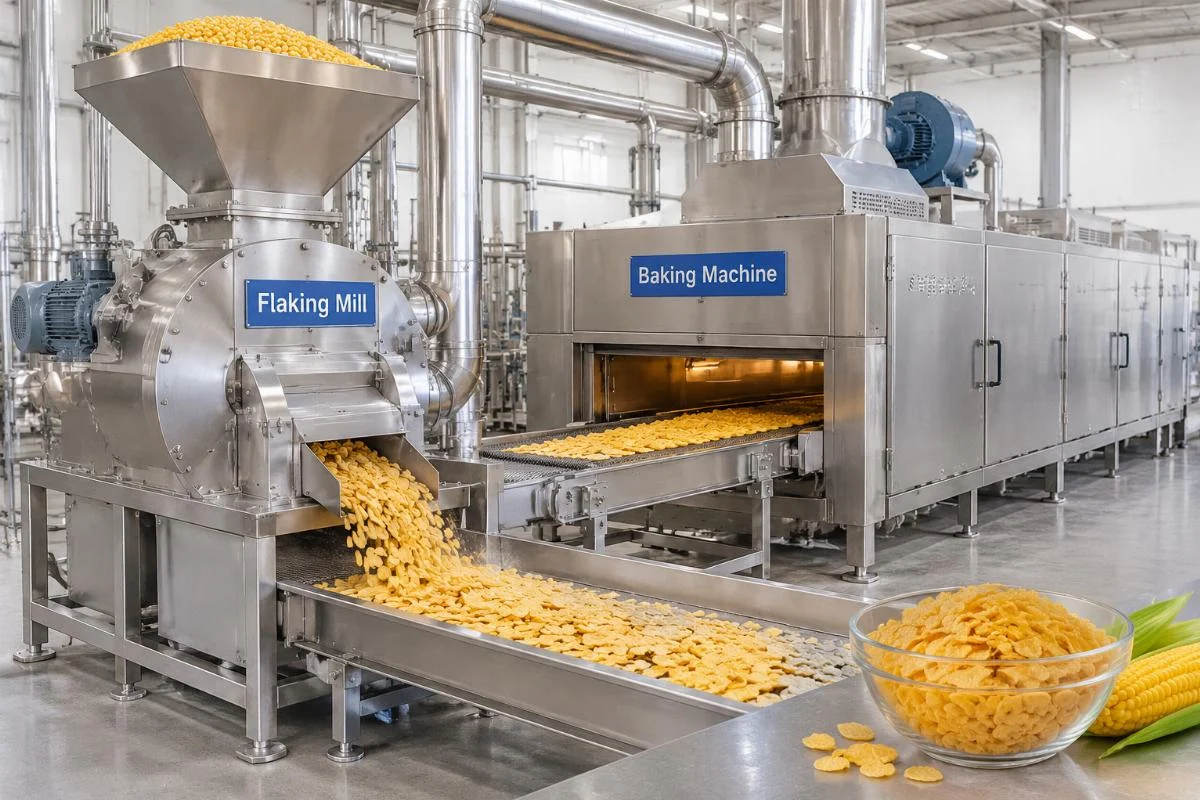
The twin-screw extruder uses combined functional screws to cook and form high-density particles, setting the foundation for the flake structure. The air roller dryer then removes surface moisture through hot air and rolling action, preparing the material for the flaking mill. Here, high rigidity metal rollers with an automatic cooling system press the dried material into uniform flakes, preventing overlapping and ensuring consistent thickness. Finally, the sugar coating system melts and sprays additives evenly, while the cooler rapidly agglomerates the sugar to lock in the flavor and appearance.
The Hidden Costs of a Poorly Configured Line
Choosing the wrong equipment setup often leads to irregular shapes and oily chips that ruin the visual appeal of the final product. Inconsistent flake thickness creates a bottleneck at the sugar coating stage, where thin pieces absorb too much syrup while thick ones remain dry. This imbalance results in moldy stock during storage due to uneven moisture distribution across the batch. Ultimately, an idle line caused by frequent breakdowns or poor extrusion stability wastes both raw materials and labor hours.
Why Source Your Line from Us
We focus heavily on the flaking and drying synchronization, which is the most common failure point in breakfast cereal projects. Every line is fully assembled and run-tested in our dedicated workshop before shipment, ensuring the high rigidity rollers and baking belts are perfectly aligned. We configure the screw elements and die options specifically for your local raw materials, preventing the uneven expansion that ruins flake texture. Our engineers handle the on-site installation and train your operators to maintain the sugar sprayer and cooling belt, avoiding the clumping issues that plague poorly commissioned lines. Furthermore, we provide lifetime remote technical support to help you adjust recipes and troubleshoot downstream processing challenges.
Documentation & Delivery
- CE certificate and ISO 9001:2015 quality management records
- Factory test-run video demonstrating flaking and coating stages
- Live trial report using your specific raw materials
- Third-party inspection reports available upon request
- Packing list, commercial invoice, and customs documents
- Export wooden crates with anti-rust and moisture protection
Installation, Utilities & Maintenance
- Confirm power supply, voltage, and steam or gas requirements for the baking machine
- Verify floor layout, ceiling height, and water and compressed air connections
- Schedule regular die and cutter blade replacement for the extruder
- Perform routine screw element wear checks and dryer belt cleaning
- Clean the oil and seasoning system to prevent sugar buildup in the coating drum
- Complete comprehensive operator training for daily maintenance and safety protocols
Start Your Project with a Custom Proposal
To receive an accurate line proposal and CAD layout, please share your target capacity, preferred raw materials, and factory dimensions. We also need to know your local heating method and voltage specifications to configure the baking and extrusion stages correctly. In return, you will get an itemized technical quotation and an invitation to run a live factory trial with your own grains.
Frequently Asked Questions
Q: How is the production line configured based on my target capacity and factory layout?
A: We analyze your required output of 120 to 500 kg/h and map the 48 to 68-meter line to your available floor space. The twin-screw extruder and downstream dryers are scaled accordingly, while the flaking mill and baking machine are positioned to ensure smooth material flow. We provide a customized CAD layout to optimize your facility's ceiling height and utility connections before finalizing the design.
Q: Can the line process local raw materials like corn grits, rice, or wheat flour effectively?
A: Yes, the combined functional screws and inverter-controlled feeding allow precise adjustment for different starch contents and moisture levels. We always recommend bringing your specific local grains to our factory for a live extrusion and flaking trial. This ensures the screw profile and roller gaps are perfectly calibrated to produce uniform flakes without burning or uneven expansion.
Q: What are the key differences between the capacity variants, and how do I choose the right one?
A: The variants range from 120-150 kg/h to 300-500 kg/h, with total installed power scaling from 180 kW to 240 kW. Choosing the right one depends on your daily production targets and available utility capacity. We help you select the optimal model by balancing your market demand with the physical footprint and power consumption limits of your local factory.
Q: How does the flaking mill ensure uniform thickness without overlapping the corn flakes?
A: The flaking mill uses high rigidity metal rollers paired with an automatic cooling system to maintain a precise gap under heavy pressure. This prevents the rollers from expanding due to heat, which is the main cause of overlapping and uneven thickness. Consistent cooling ensures every flake is pressed to the exact same density for uniform toasting later.
Q: What is included in the on-site installation, commissioning, and operator training services?
A: Our engineers travel to your facility to assemble the line, align the flaking rollers, and calibrate the sugar coating system. We run full production trials using your raw materials to verify the final product quality. Additionally, we train your local team on daily operation, screw element inspection, and cleaning procedures, backed by lifetime remote video support.

20,000 m²
Production base with test workshop
Factory Trial
Test This Machine With Your Own Raw Material
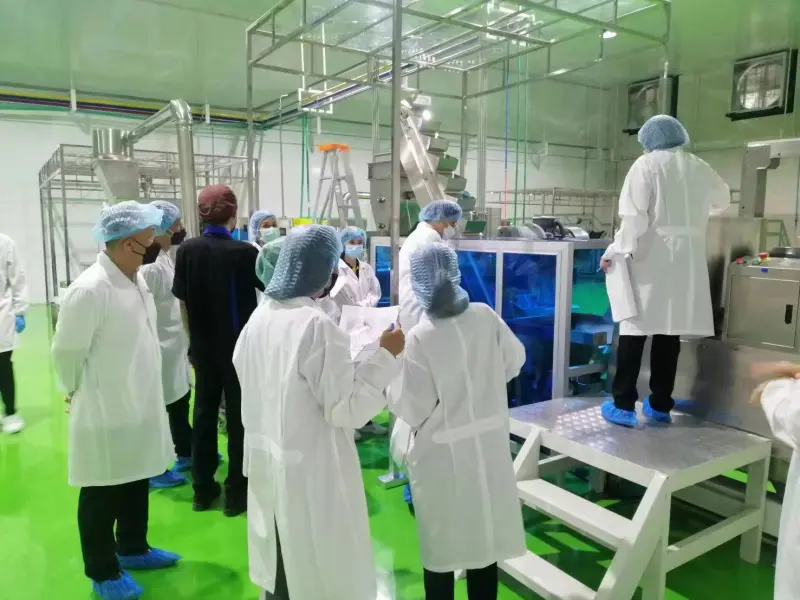
You can see your product come off the machine before you commit. Visit Jinan MT Machinery in Shandong, China, and run your own raw material on our equipment.
-
Factory trial runs
Bring your local raw material and check expansion, texture and shape on the machine in our test workshop.
-
Recipe testing
Our R&D team focuses on puffing technology and twin-screw extrusion, and tests your recipe against your target product.
-
Custom dies and screw combinations
Die design, screw combination, heating method and output are built around your product. OEM and ODM are supported.
Delivery to Production
One Supplier From Crate to First Production Run
Jinan MT Machinery packs, installs, trains and supports every project itself, with equipment exported to 60+ countries and 1,000+ production lines delivered.
-
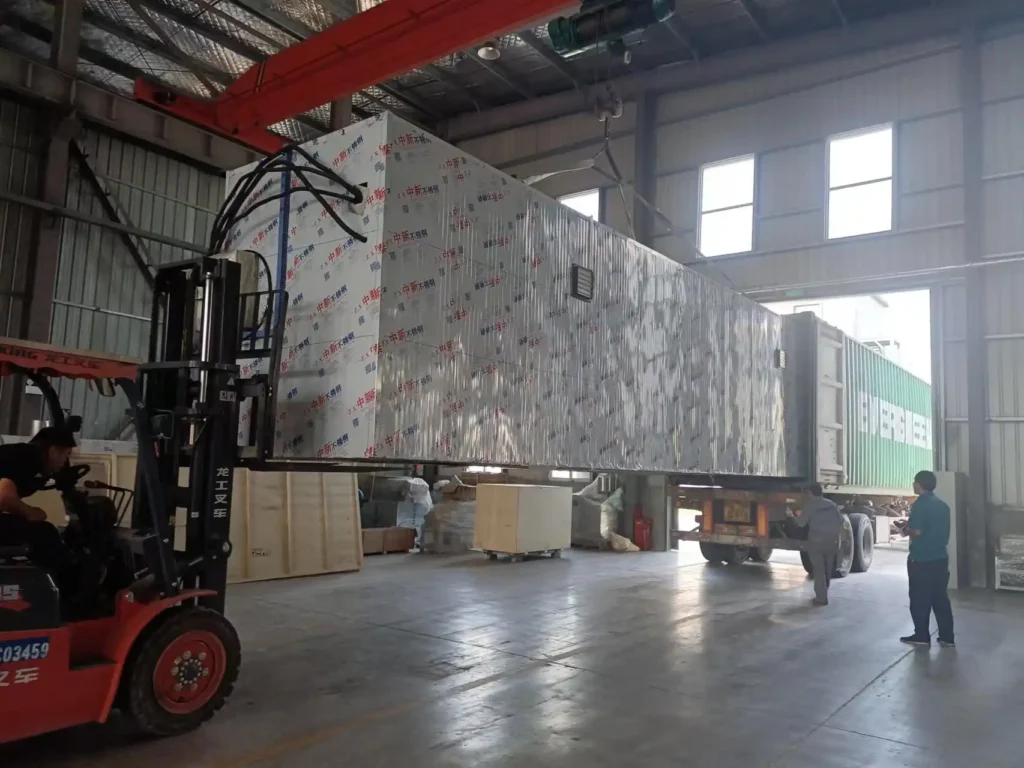
01 Export Wooden Crates
Rust-proof and moisture-proof packing. We help arrange export logistics.
-
02 Installation and Training
Engineers install and commission on site, then train your operators.
-
03 12-Month Warranty
Lifetime remote support by video, WhatsApp and email after commissioning.
-
04 Spare Parts at Cost
Priority dispatch at cost price, with parts supply for 10+ years.
Same Product Family
Related Machines
These machines share the same product family and can be planned into one integrated line.
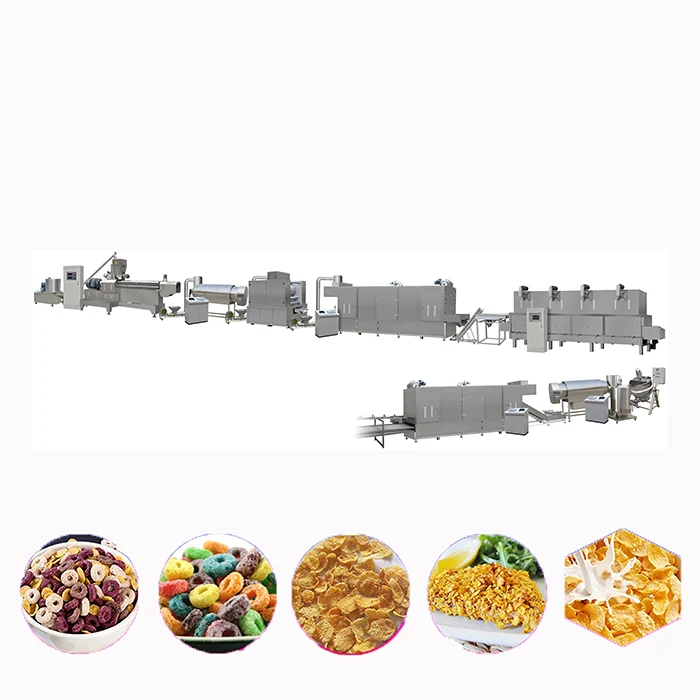 breakfast cereals machine Automatic Breakfast Cereal Roasted Corn Flake Production Line
 breakfast cereals machine Corn Flakes Production Line Automatic Breakfast Cereal Extruder Machine
 breakfast cereals machine Breakfast Cereal Corn Flakes Production Line Manufacturer
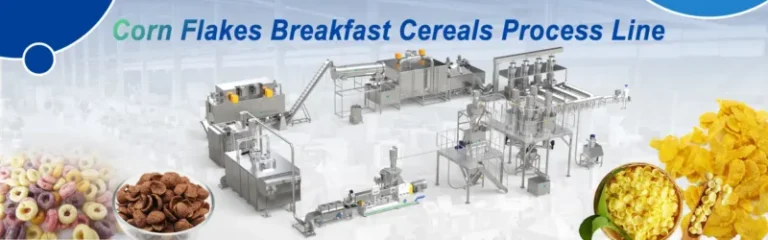 corn flakes machine Corn Flakes Breakfast Cereal Production Line Manufacturer
Where It Runs
Applications for This Machine
This machine serves the product categories below, from breakfast cereals to snacks and nutrition foods.
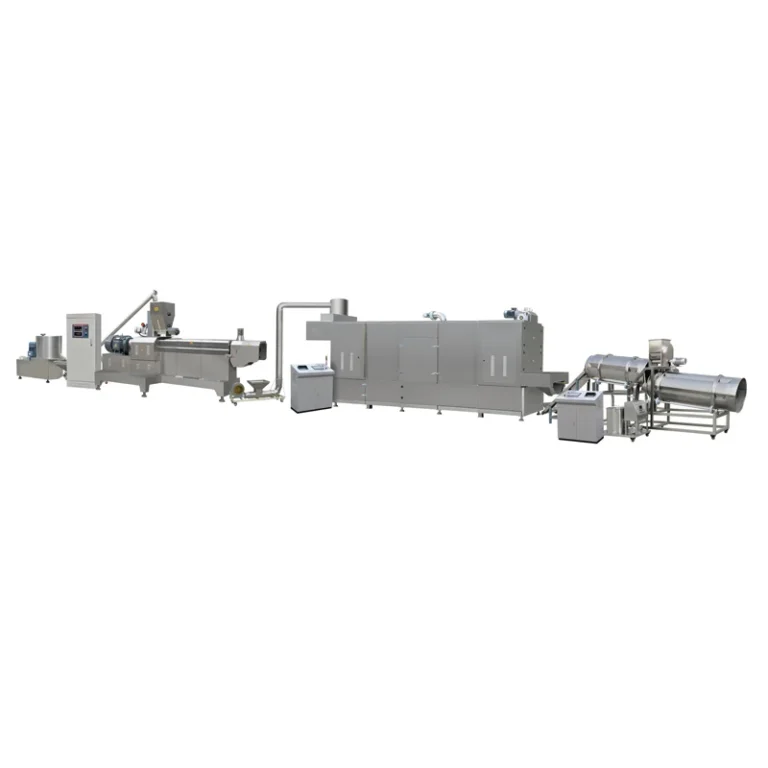 Breakfast Cereals Cereal and breakfast food plants use twin-screw extruders, flaking rolls, toasters, coating drums and coolers to make corn flakes, cereal rings, cereal balls and… breakfast cereals machine · corn flakes machine
 Kids & Nutritional Foods Children's food and nutrition brands use extrusion, drying, coating and packing equipment to make fun-shaped cereals, puffed snacks and grain-based products with tailored recipes.… breakfast cereals machine · corn flakes machine
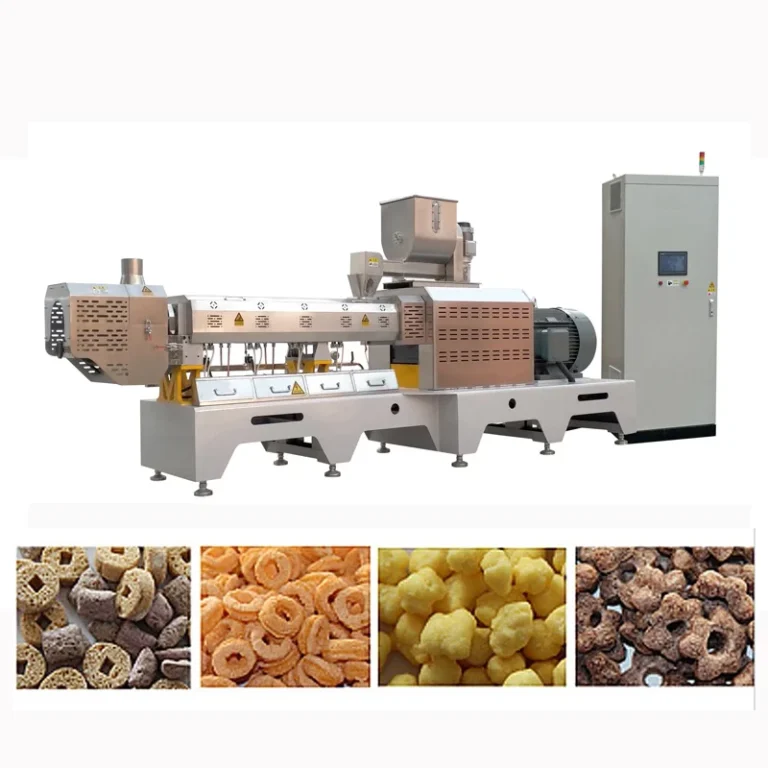 Puffed Snack Foods Snack factories and contract manufacturers use twin-screw extruders, die and cutting assemblies, dryers and flavouring drums to produce corn puffs, cheese balls, corn sticks… breakfast cereals machine
FAQ
Questions Buyers Ask First
Trials, lead times, payment and documents are the four points buyers confirm with Jinan MT Machinery before ordering.
Can I test this machine with my own raw material before ordering?
Yes. You are welcome to visit our factory and run a trial with your own raw material. Recipe testing is available during the visit. Dies and screw combinations can be customized to your product.
What is the delivery time?
Common standard models are in stock and ship within 10 days. Custom configurations take 30–50 working days. Every line completes a full test run before shipment.
Which payment terms do you accept?
We accept T/T, L/C (usually at sight) and Alibaba Trade Assurance. PayPal is available for small orders and Western Union for sample orders. D/P and D/A are considered for long-term customers with good credit.
Which documents ship with the machine?
Each shipment includes a CE certificate, packing list, invoice and customs documents. CE certification follows Machinery Directive 2006/42/EC, and our quality management system is ISO 9001:2015. A third-party inspection report can be arranged.
How we pack and ship your order
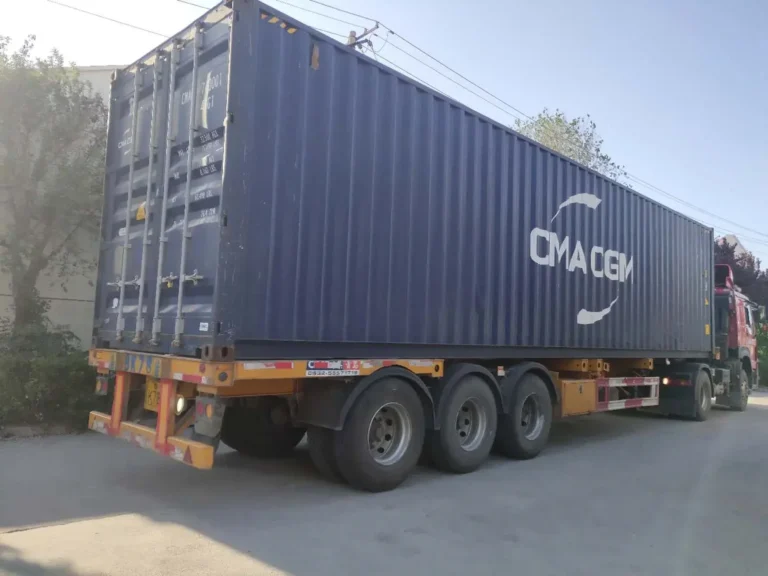
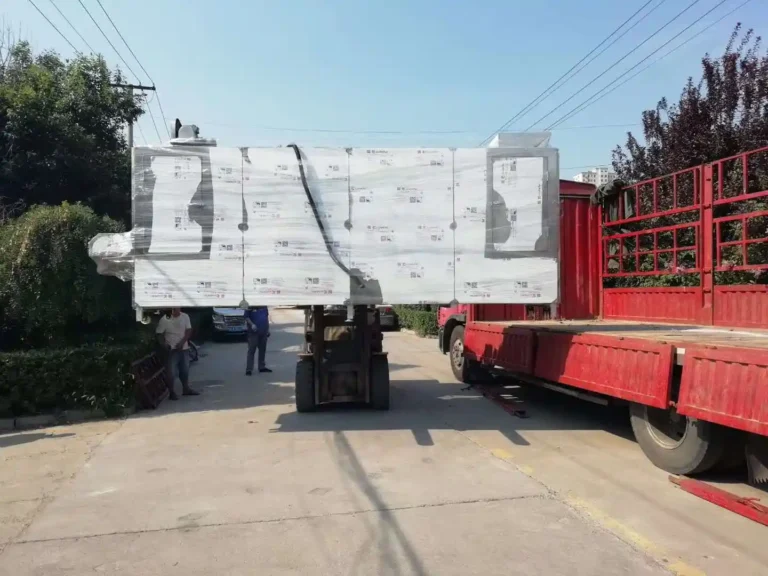
Export packing
Packed for international transport. Tell us if you need custom labels, marks or packing.
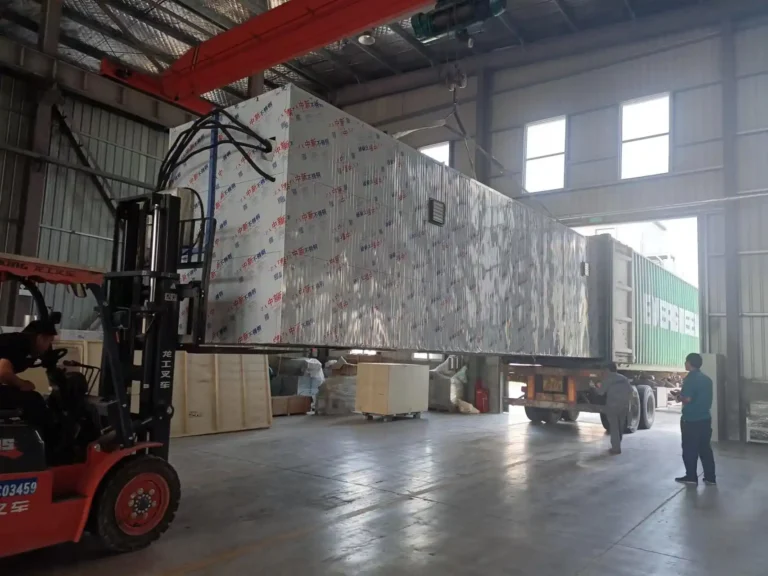
Shipping to you
Tell us your port or delivery address and we will quote the freight and lead time for your order.
Shipping documents
Commercial invoice and packing list come with every shipment; ask us for any other documents your customs needs.
What our customers say
“Corn flakes with consistent thickness and toast colour - our private-label client approved the first production run.”
“Corn puffs, cheese balls and rings from one extruder. We later added breakfast cereals on the same line with the cereal section.”
“Sugar coating and glazing are even with no clumping. Before, our coated cereal looked patchy in the bag.”
Technical Quotation
Get a Quote for Corn Flakes Breakfast Cereal Maize Flakes Production Line
We reply within 24 hours with an itemized technical quotation. Process consultation and CAD or 3D workshop layout are free.
- WhatsApp+86 186 1542 3372
- Emailmt@mtmachinery.com
- Response timeReply within 24 hours
- Export markets
- 60+
- Global customers
- 500+
- OEM partners
- 30+